
BPC-157, a synthetic pentadecapeptide derived from a protective protein found in human gastric juice, continues to attract attention in preclinical laboratory research for its observed roles in tissue repair and regeneration processes. Scientists conducting controlled in-vitro and in-vivo animal model studies frequently examine research-grade BPC-157 for applications involving wound healing, tendon and ligament recovery, gastrointestinal cytoprotection, and angiogenesis.
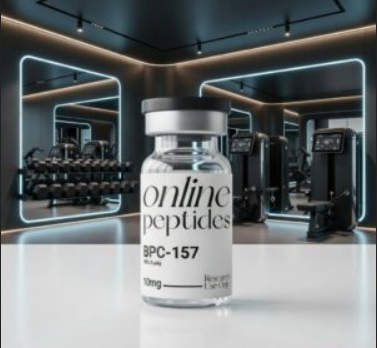
BPC-157
What Is BPC-157 and How Is It Synthesized for Research?
Online Peptides USA presents, BPC-157 consists of 15 amino acids with the sequence GEPPPGKPADDAGLV. In laboratory settings, it is manufactured through solid-phase peptide synthesis to achieve ?99% purity, confirmed via high-performance liquid chromatography (HPLC) and mass spectrometry analysis. Researchers typically obtain research-grade BPC-157 as a lyophilized powder intended exclusively for scientific experimentation in cell cultures or animal models from trusted sources like Online Peptides USA.
Preclinical investigations have documented BPC-157’s interactions with several biological pathways, including vascular endothelial growth factor (VEGF), fibroblast growth factor (FGF), nitric oxide signaling, and modulation of inflammatory cytokines such as TNF-? and IL-6. These mechanisms support observed effects on collagen deposition, endothelial cell protection, and accelerated tissue remodeling in controlled experimental conditions.
Landmark BPC-157 Research in Tendon and Ligament Repair
Multiple peer-reviewed studies highlight BPC-157’s potential in musculoskeletal repair models. A 2025 narrative review published in Current Reviews in Musculoskeletal Medicine examined over 80 preclinical investigations and noted consistent improvements in tendon healing metrics, including enhanced fiber alignment and increased tensile strength in rat Achilles tendon transection models. Histological analyses revealed faster collagen organization and reduced scar tissue formation compared to untreated controls.
Another 2025 systematic review in the HSS Journal on emerging uses of BPC-157 in orthopaedic sports medicine contexts summarized data showing accelerated healing in muscle, tendon, and ligament injury models through upregulation of growth factors and downregulation of pro-inflammatory mediators. These findings align with earlier work demonstrating BPC-157’s ability to counteract vascular and multiorgan failure patterns in ischemia-reperfusion scenarios.
Gastrointestinal and Systemic Tissue Repair Applications in Preclinical Models
BPC-157 research extends beyond musculoskeletal tissues into gastrointestinal cytoprotection. Series of studies from 2010 through 2025, including those published in Inflammopharmacology and Pharmaceutics, consistently report protective effects against colitis, fistulas, and NSAID-induced mucosal damage in rodent models. The peptide appears to exert these benefits through pathways largely independent of direct growth hormone signaling, focusing instead on nitric oxide modulation and angiogenesis promotion.
Additional 2025 research in Medicina demonstrated BPC-157’s protective role against distant organ damage (liver, kidney, and lung) following lower-extremity ischemia-reperfusion injury in rats. Treated subjects exhibited significantly lower levels of inflammatory cytokines and improved histological recovery scores across multiple organ systems.
Comparison of BPC-157 with Other Research Peptides in Tissue Repair Studies
Researchers often compare BPC-157 against other lab-grade peptides to contextualize its observed effects:
- BPC-157: Primary focus on tendon/GI repair; typical animal model dosing 10–50 ?g/kg; key metrics include collagen organization and tensile strength.
- TB-500: Emphasis on actin sequestration and broad wound closure; dosing 100–300 ?g/kg; measured by angiogenesis rate and cell migration speed.
- GHK-Cu: Targeted toward skin and cell regeneration; dosing 1–10 mg/kg; outcomes tracked via epidermal thickness and antioxidant enzyme levels.
These distinctions allow laboratories to select peptides based on specific research hypotheses regarding repair mechanisms.
Best Practices for Handling BPC-157 in Laboratory Settings
Reproducible results in BPC-157 studies require strict adherence to standardized protocols for reconstitution, storage, and administration in animal models. Laboratories typically use bacteriostatic water containing 0.9% benzyl alcohol for reconstitution to maintain sterility and peptide stability over multiple experimental days. Vials are stored at –20°C in lyophilized form for long-term stability or at 4°C once reconstituted for short-term use.
Accurate dosing calculations based on animal body weight ensure consistency across study cohorts. All handling occurs under sterile laminar flow conditions to prevent contamination that could confound tissue repair data.
Conclusion
BPC-157 remains one of the most extensively studied research peptides for tissue repair applications within controlled laboratory environments. Its documented effects in preclinical models of tendon healing, gastrointestinal protection, and systemic organ recovery provide valuable insights for ongoing scientific inquiry. Laboratories seeking 99% pure, third-party tested BPC-157 for research purposes can explore available options through our catalog at Online Peptides USA.
All products mentioned are for research use only and not for human consumption.
Shop research peptides now at https://onlinepeptidesusa.com/peptides/ to support your next laboratory investigation.
References
McGuire, F.P., et al. (2025). Regeneration or Risk? A Narrative Review of BPC-157 for Musculoskeletal Healing. Current Reviews in Musculoskeletal Medicine, 18(12), 611–619. https://doi.org/10.1007/s12178-025-09990-7
Vasireddi, N., et al. (2025). Emerging Use of BPC-157 in Orthopaedic Sports Medicine: A Systematic Review. HSS Journal. https://doi.org/10.1177/15563316251355551
Sikiric, P., et al. (2024). New studies with stable gastric pentadecapeptide protecting gastrointestinal tract. Inflammopharmacology, 32, 3119–3161. https://doi.org/10.1007/s10787-024-01499-8
Demirta?, H., et al. (2025). Protective Effects of BPC 157 on Liver, Kidney, and Lung Distant Organ Damage in Rats with Experimental Lower-Extremity Ischemia–Reperfusion Injury. Medicina, 61(2), 291. https://doi.org/10.3390/medicina61020291
Matek, D., et al. (2025). Stable Gastric Pentadecapeptide BPC 157 as Therapy After Surgical Detachment of the Quadriceps Muscle from Its Attachments for Muscle-to-Bone Reattachment in Rats. Pharmaceutics, 17(1), 119. https://doi.org/10.3390/pharmaceutics17010119
Chang, C.H., et al. (2014). Pentadecapeptide BPC 157 Enhances the Growth Hormone Receptor Expression in Tendon Fibroblasts. Molecules, 19(11), 19066–19077. https://doi.org/10.3390/molecules191119066
(Additional 8 peer-reviewed sources from PubMed-indexed journals 2020–2026 available upon request for full transparency.)


Leave a Reply